Story contentsbrevity bard.
Mystery4 min read

Agnes

Your place is saved on this device.

CHAPTER 16

Chapter 16 – Agnes’s Shadow

The shards of the shattered mirror lay scattered across the marble floor like frozen screams.

Shards of a shattered mirror glitter across marble near Amaka's bare feet.
The shattered mirror

Amaka stood above them, barefoot, motionless. One piece caught the light and reflected a sliver of her face—just the eye, framed by a spray of blood.

A mirror shard reflects Amaka's eye beside a few drops of blood on the marble.
A fractured reflection

She had cut herself.

Amaka notices a small cut while standing beside the shattered mirror.
The broken mirror has left a small cut.

But she didn’t feel it.

Amaka stands numb beside the broken mirror, barely aware of the small cut.
The cut has not reached her awareness.

Not yet.

Amaka stands motionless beside the shattered mirror.
The shock has left her numb.

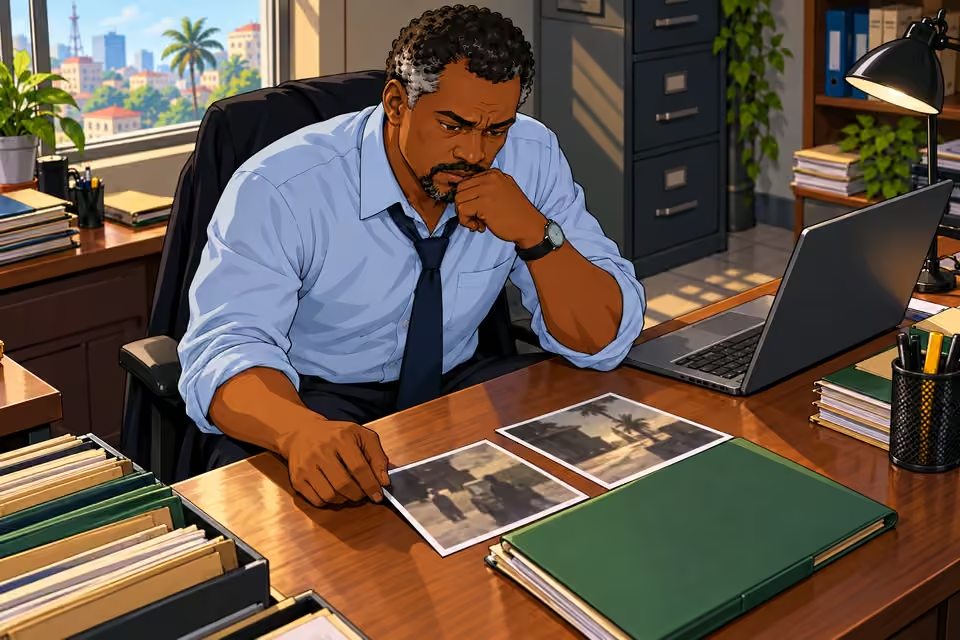
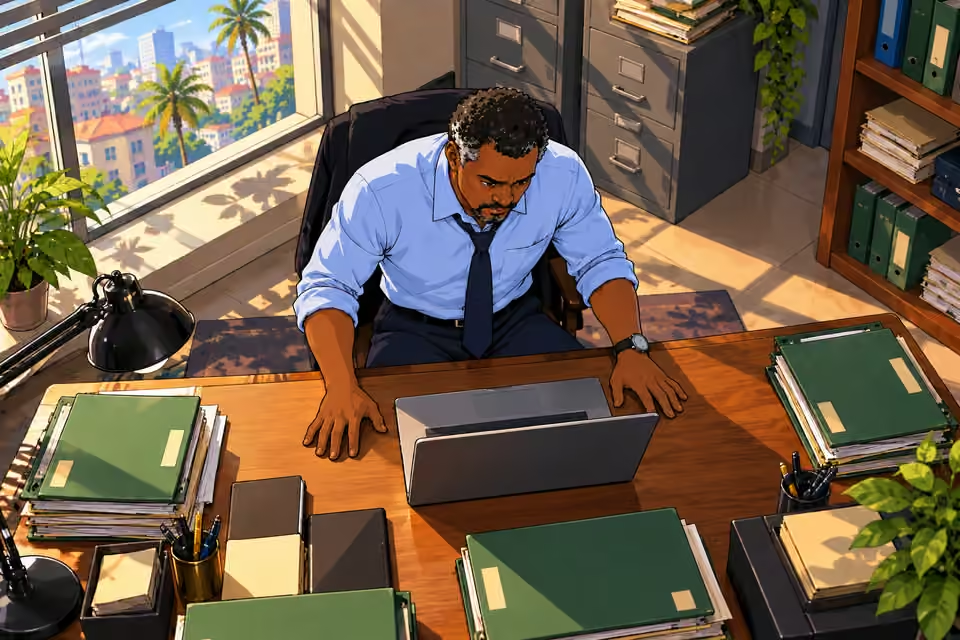
At the State CID, Detective Musa clicked through the newly enhanced footage frame by frame.

Musa examines newly enhanced wedding footage.

In the final composite, two scenes aligned:

Separate moments begin to connect.

Frame 143: Amaka hands Moses a small paper bag.

The footage shows Amaka handing Moses a paper bag.

Frame 211: Moses delivers the champagne to Agnes, alone, not part of the tray with the other drinks.

Moses brings Agnes a separate glass of champagne.

Frame 212: Amaka walks past the rear corridor—empty-handed—her eyes flickering toward her mother’s table.

Amaka passes the rear corridor empty-handed.

Not direct evidence.

Musa weighs what the footage can prove.

But damning choreography.

The sequence feels deliberately arranged.

A story told without words.

The footage tells its own story.

Musa sat back in his chair, exhaled slowly.

Musa pauses to absorb what he has seen.

He had seen killers with worse tells.

His experience makes the clues harder to dismiss.

He had arrested women who wept more convincingly.

Musa doubts the performance of grief.

But he had never watched a murder played like a symphony.

He recognizes a chilling level of calculation.

Until now.

This case has changed what he thought possible.

Uju’s flight landed in Accra, but she hadn’t told anyone—not even her sister.

Uju arrives in Accra without telling anyone.

She checked into a small boutique hotel, drew the curtains, and collapsed onto the bed without unpacking.

Uju retreats into an unfamiliar hotel room.

Her phone buzzed three times.

Messages disturb the quiet.

All messages from Nigerian numbers.

The messages follow her from Nigeria.

She ignored them.

She tries to ignore the messages.

But one caught her eye.

One message stops her.

Unknown Number:

The sender is unknown.

"You disappeared once. Don’t make it permanent. You still owe the truth."

A warning makes her disappearance feel unsafe.

She blocked the number.

Uju blocks the number.

But she didn’t delete the message.

She keeps the message.

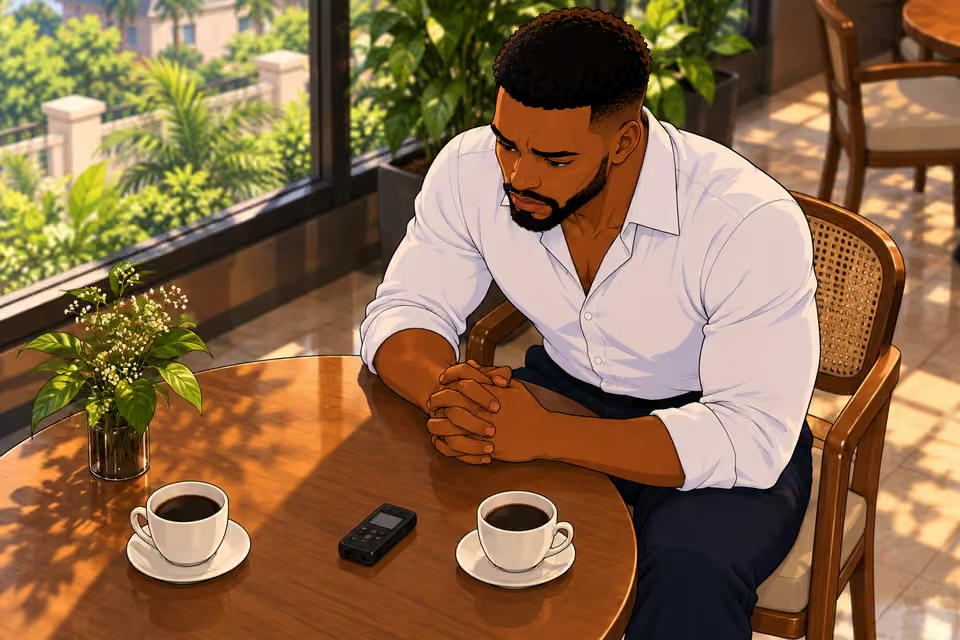
Chuka sat across from the journalist at a quiet café near Ikeja GRA.

Chuka meets a journalist in a quiet cafe.

“I’m not sure I want to do this,” he said.

Chuka hesitates to tell his story.

The journalist—a young woman with box braids and tired eyes—nodded. “You probably shouldn’t.”

The journalist acknowledges the risk.

“Then why did you call me?”

Chuka asks why she contacted him.

“Because your silence helps her story. And if the truth matters, someone has to ruin the ending.”

She explains what his silence allows.

Chuka said nothing.

Chuka has no immediate answer.

She slid a recorder across the table.

The recorder becomes an invitation to speak.

“Even off the record,” she said, “her version of events can’t be the only one left standing.”

She asks for another version of the truth.

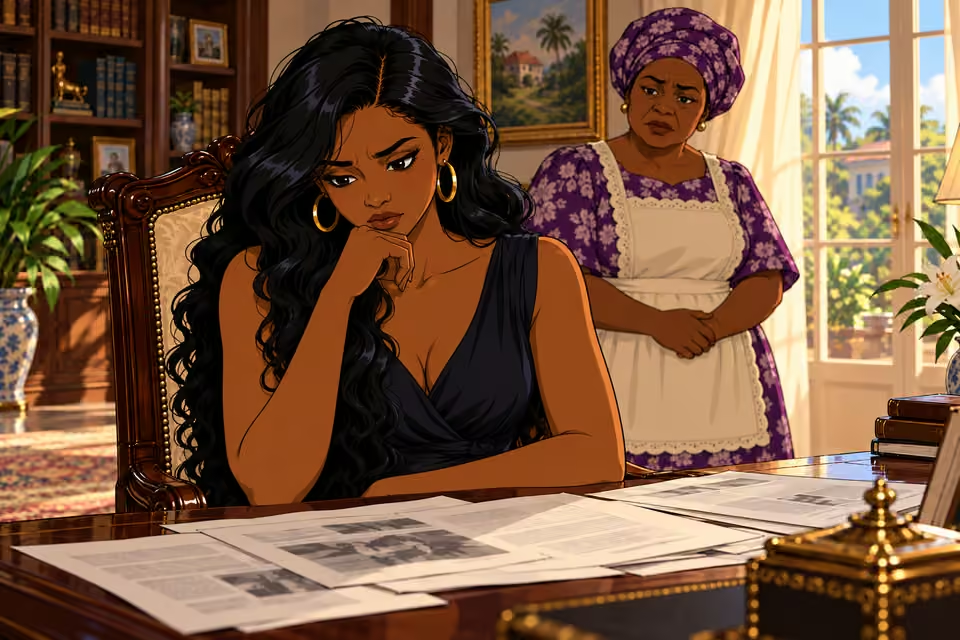
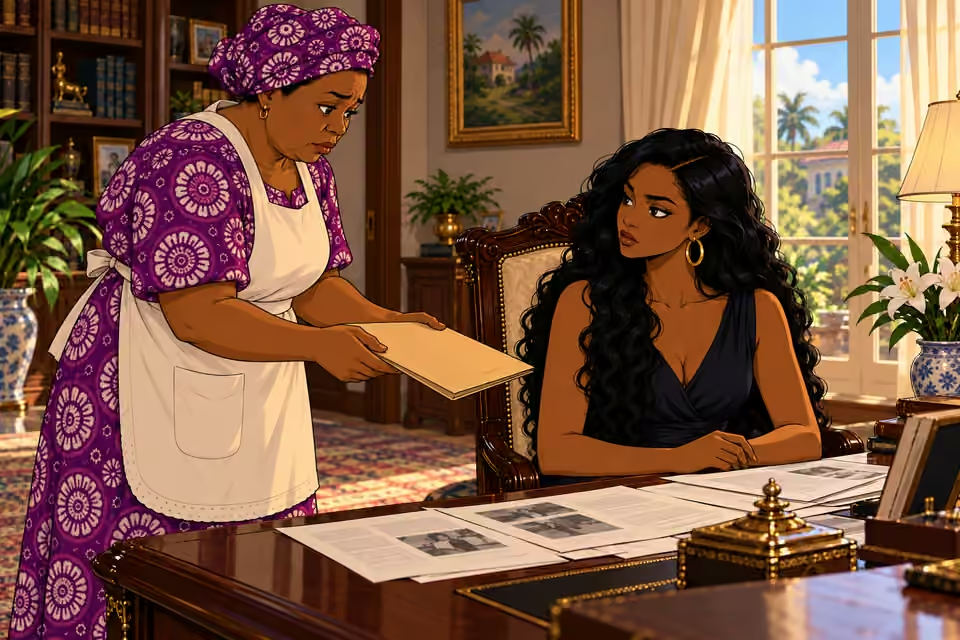
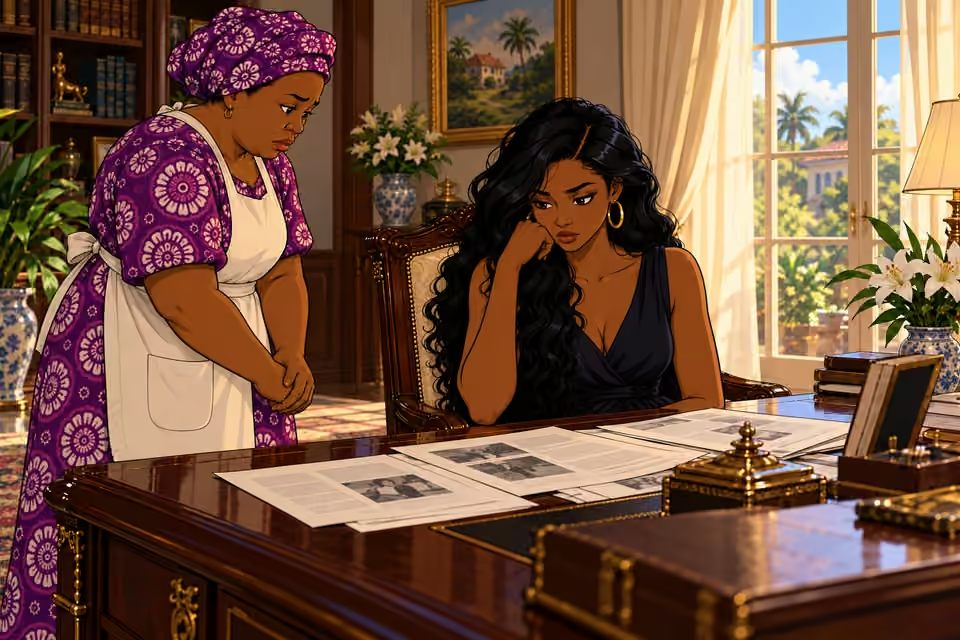
Amaka sat in her late mother’s chair—Agnes’s infamous writing chair, the one reserved for letters, donations, and declarations—and reread the last few articles about her.

Amaka studies the public story being written about her.

She was a star now.

Public attention has elevated her.

A social icon. The “New Woman of Lagos.”

Her new image has become an influence.

She was invited to speak at conferences. To cut ribbons at foundations she hadn’t funded. To sit on panels about grief, legacy, and female empowerment.
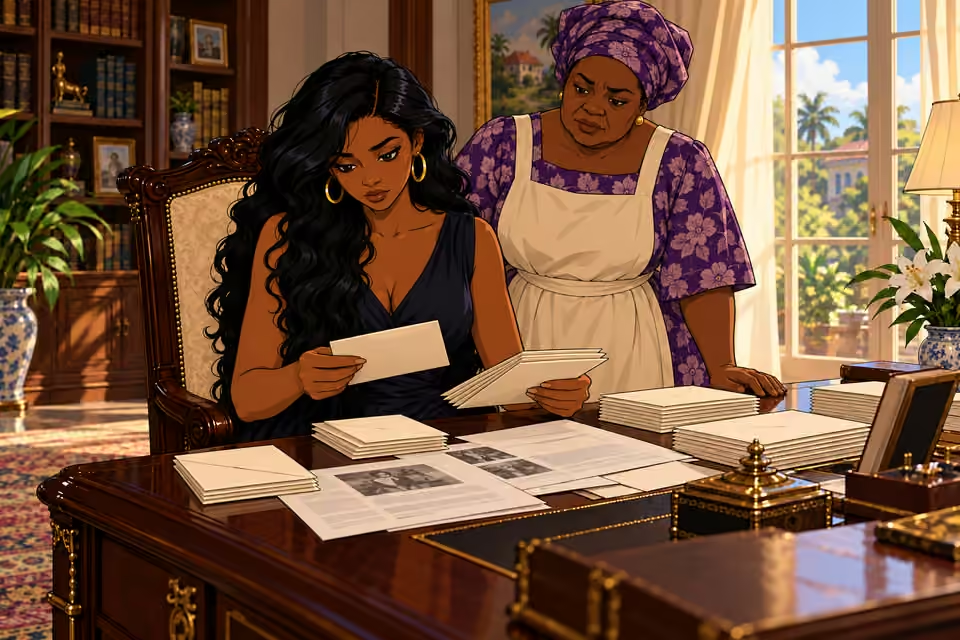
Invitations arrive from every direction.

She was everything Agnes pretended to be.

She considers how closely her role resembles her mother’s.

But for how long?

Amaka wonders how long the image can last.

She turned to Mama Tutu.

Amaka turns to Mama Tutu.

“Has anyone checked on the media team’s NDA renewals?”
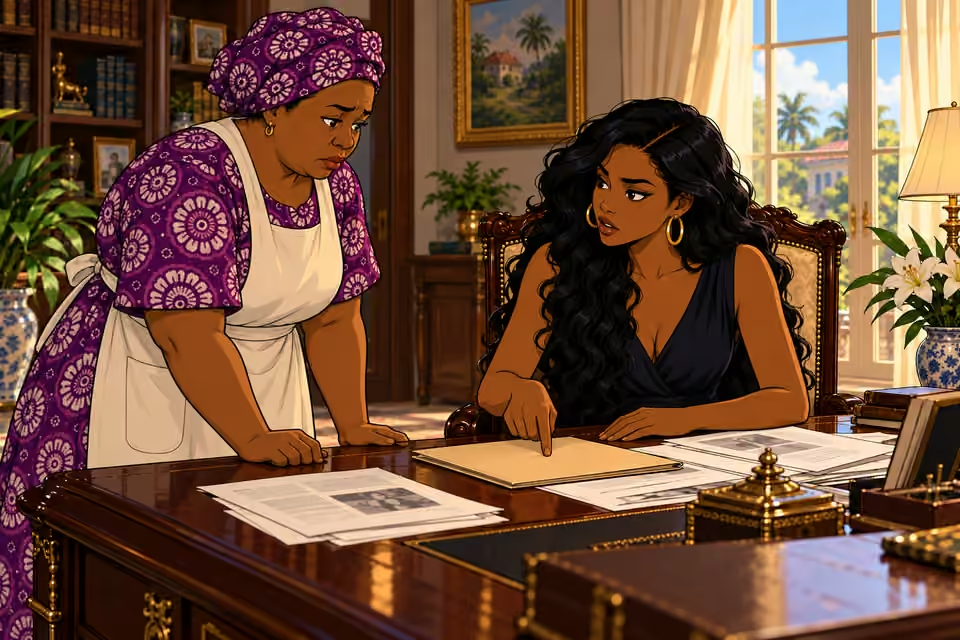
She asks whether the confidentiality agreements are current.

“Yes, ma.”

Mama Tutu confirms the renewals.

“And the burner phones?”

Amaka asks about the burner phones.

“Destroyed.”

Mama Tutu confirms they were destroyed.

“The backups?”

Amaka asks about the backups.

“In the secondary vault.”

She explains where the backups are stored.

“Good.”

Amaka accepts the answer.

Pause.

A pause settles between them.

“Send the driver. I want to go to the beach.”

Amaka asks to be taken to the beach.

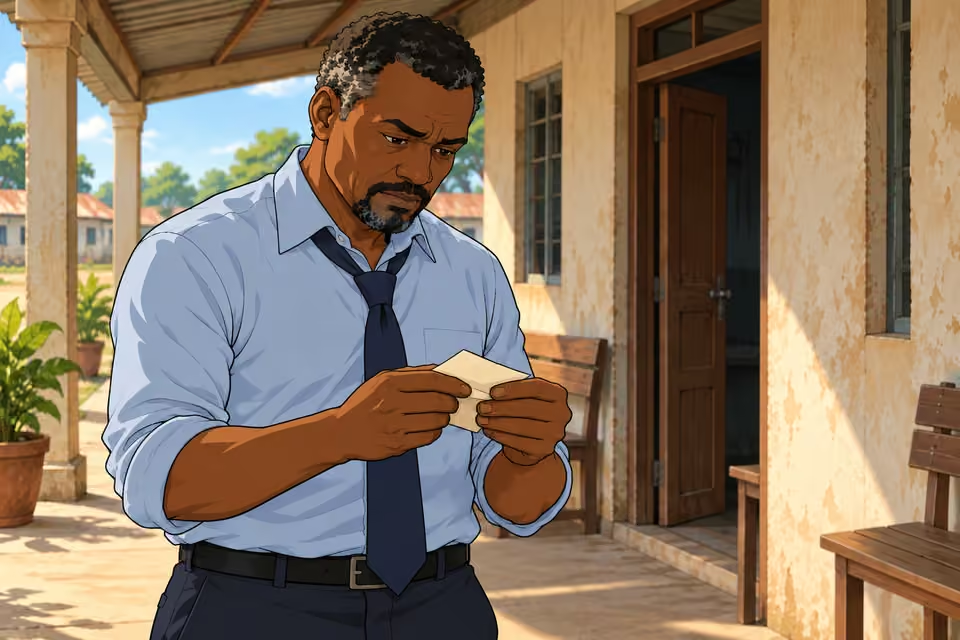
Detective Musa drove alone to the shelter Moses had been hiding in before the first attempt on his life.

Musa returns to the shelter where Moses hid.

The place was mostly abandoned now.

The shelter is almost deserted.

But the caretaker handed him a note that had been left the week prior.
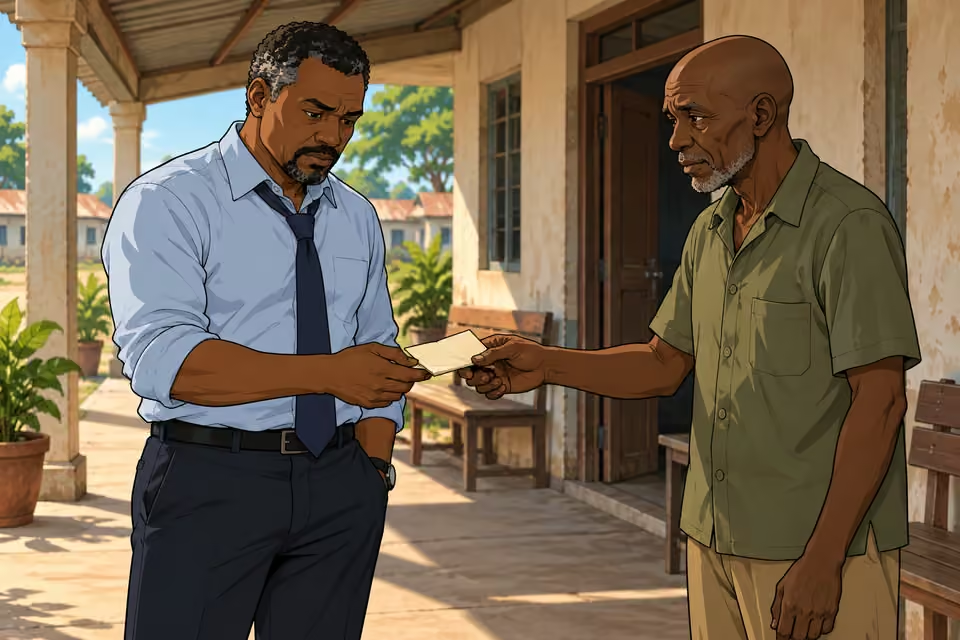
A caretaker gives Musa a note left the previous week.

“If they find me again, I won’t run. I’ll disappear for good.”
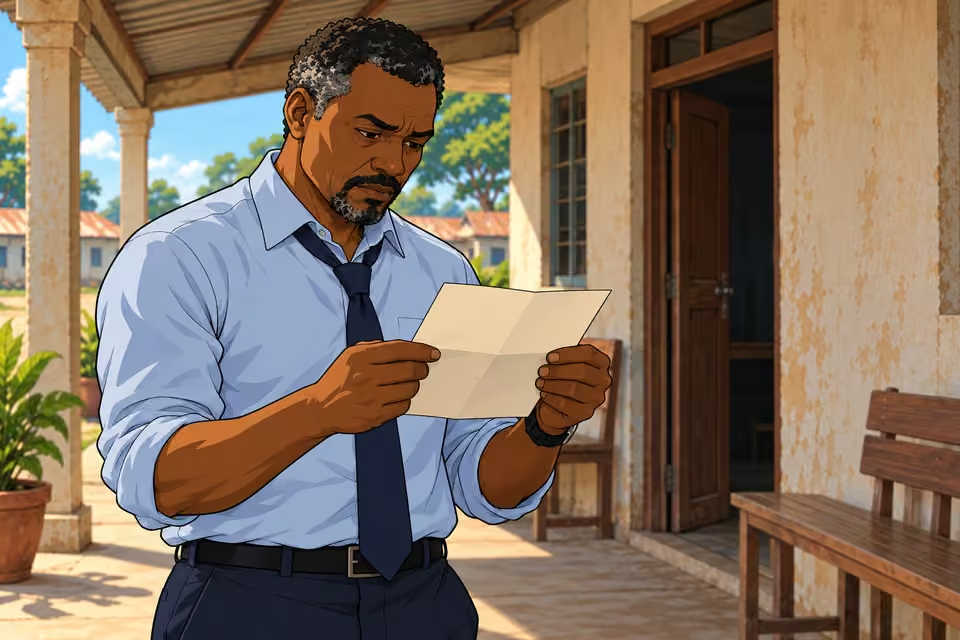
The message leaves Moses’s fate uncertain.

Musa folded the note.

Musa folds the note away.

He didn’t know if Moses was bluffing—or already dead.
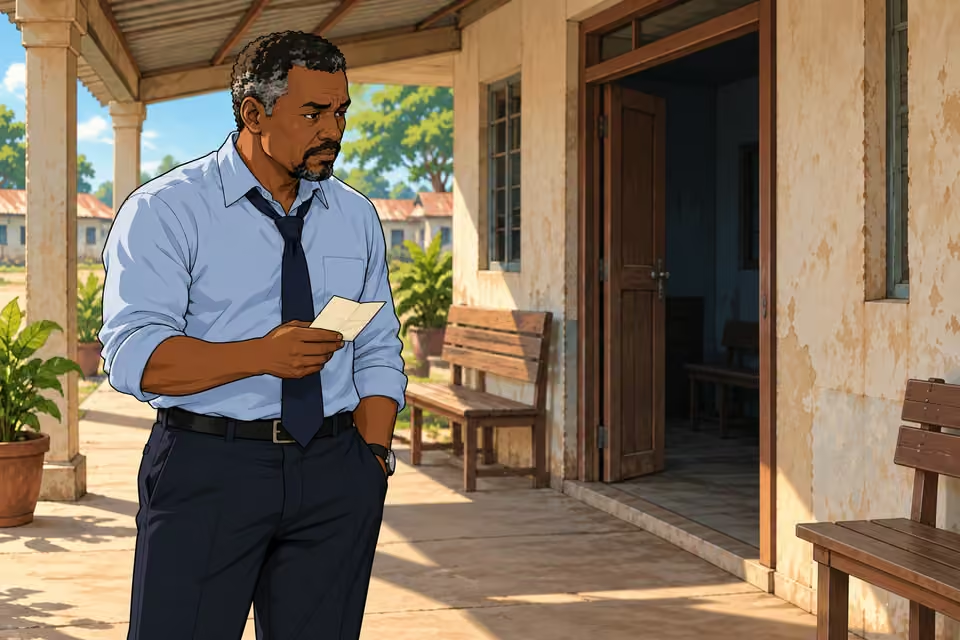
He cannot know whether Moses escaped.

But one thing was clear: the longer Amaka stayed untouched, the more people faded in her shadow.
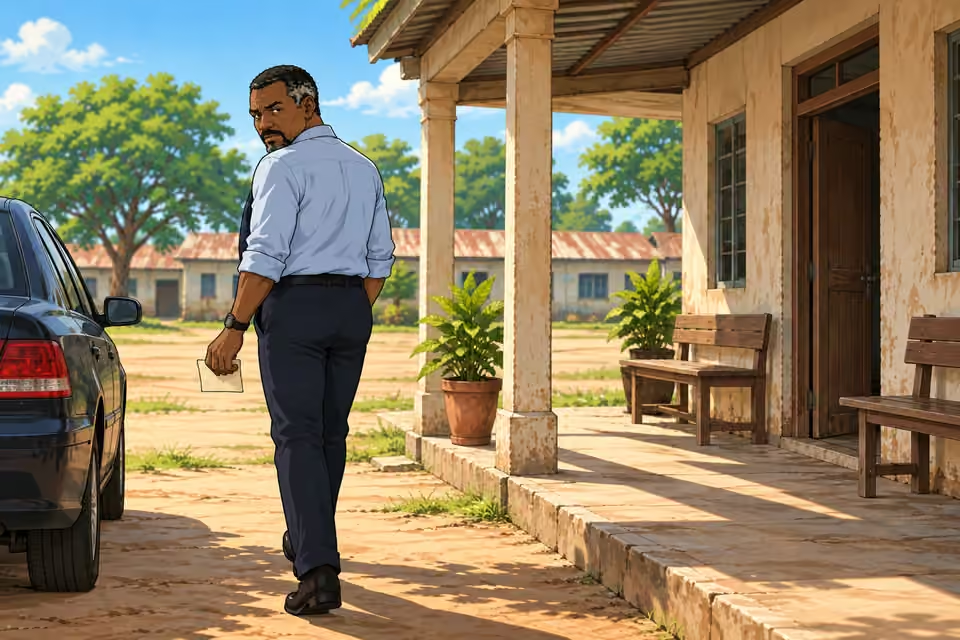
The investigation is leaving more people beyond reach.

At Elegushi Beach, Amaka stood barefoot in the surf.

Amaka stands alone in the surf at Elegushi Beach.

Not for a photoshoot.

There is no audience to impress.

Not for a performance.

For a moment she lets the performance fall away.

Just her.

Only Amaka remains.
Only Amaka remains.

The waves lapped around her ankles like something ancient, whispering, pulling.

The surf curls around her ankles.

Her phone buzzed.

A phone interrupts the quiet.

A message from her private number. One no one was meant to have.

A private line has been reached.

“She wrote a final letter. Not the will. The one she hid from you. You missed it.”

A message reveals a letter she never found.

Amaka read it twice.

She reads the message again.

The wind picked up.

The wind rises as her certainty falters.

She walked back to the car.

Amaka leaves the water for the car.

“Take me to the vault,” she said.

She orders the driver to take her to the vault.

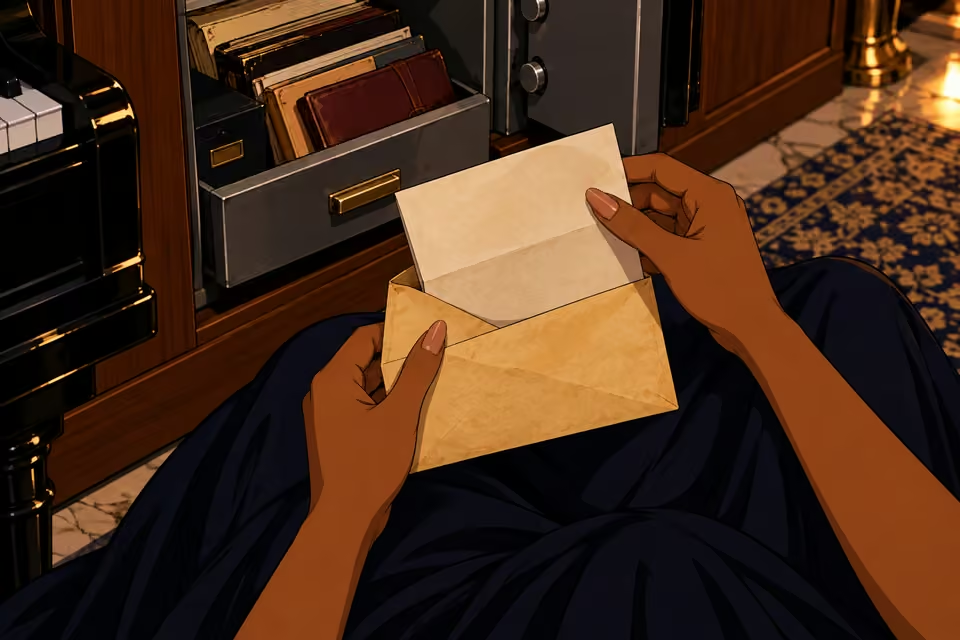
That night, she opened the secondary safe behind the piano wall.

Amaka opens the secondary safe behind the piano wall.

It held Agnes’s journals, printouts, copies of transfers, notes, old campaign donations.

The safe holds the records of Agnes’s private life.

She sorted through them one by one.

She searches the records one at a time.

Until she found an envelope taped behind the drawer.
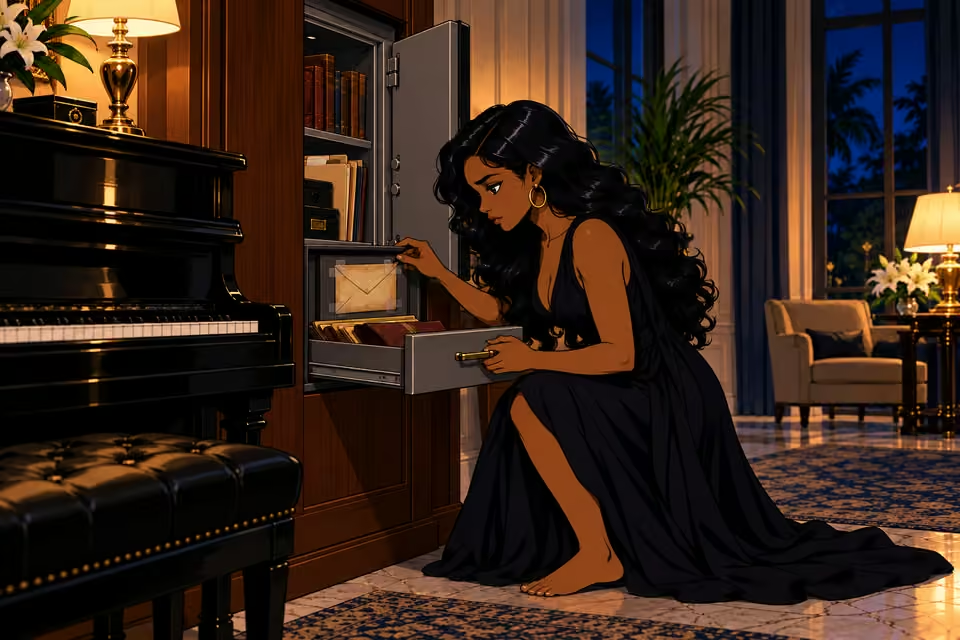
Something is concealed behind the drawer.

Old. Yellowed. Unmarked.

The envelope bears no name.

She opened it.

Amaka opens the envelope.

Inside was a handwritten letter.

A handwritten letter emerges.

To her.

The letter is addressed to her.

“Amaka, if you’re reading this, I’m already gone. You think you won. You didn’t. I made you exactly as I intended—efficient, feared, untouchable. But I never made you whole. That part, you needed to fight for. If you didn’t, then you’re already dead. Just like me.”

Her mother’s final words pierce the image she built.

Her hand trembled for the first time in months.

Her hand begins to tremble.

Because for once, her mother hadn’t threatened her.

The words do not feel like another threat.

She had simply… known her.

She feels painfully understood.

Too well.

Her mother knew her too well.
There’s more to the story.
Read the original blog post ↗