Story contentsbrevity bard.
Mystery5 min read

Agnes

Your place is saved on this device.

CHAPTER 9

Chapter 9 – The Cook Who Disappeared

His name was Moses Edem.

Moses Edem stands warily in the wedding catering kitchen, wearing a cook's jacket and apron.
The temporary cook

The cook.

Moses prepares a serving tray in the wedding kitchen.
The cook at work

Hired three days before the wedding by an event staffing agency in Yaba. No prior record. No digital footprint. One of hundreds of casual hires shuffled through the Lagos elite's endless stream of functions.

Moses receives a temporary catering assignment at the Yaba staffing office.
A casual hire

Until the morning after the wedding, when he vanished.

The cook’s empty workstation stands quiet the morning after the wedding.
By morning, Moses has vanished.

No resignation. No call. No word. Just a locked phone and a cleaned-out locker at the staffing office.

An empty locker and locked phone mark Moses’s disappearance.
There was no resignation, call or explanation.

Musa stared at his personnel file—scanned copy of a temporary ID, a Lagos address that led to a church shelter, and an emergency contact that turned out to be disconnected.

Musa studies the missing cook’s personnel file.

“How does someone go from cooking a billionaire’s last meal to disappearing like smoke?” he muttered.

Musa questions the cook’s disappearance.

His phone buzzed. A message from the lab.

A laboratory message arrives on Musa’s phone.

Latent fingerprint match confirmed. Champagne glass. Belongs to Moses Edem.

The laboratory confirms that the glass carries Moses’s fingerprint.

Meanwhile, Amaka sat across from her family’s long-time private banker in a discreet Victoria Island office.

Amaka meets the family’s private banker.

“The accounts in Malta and Seychelles have been closed,” he said, sliding a file across the desk. “Funds consolidated under the Emecheta Foundation. As per your instructions.”

The banker slides the consolidated-account file to Amaka.

“Any flags?”

Amaka asks whether the transfers raised concerns.

“A few. But we handled them quietly.”

The banker assures her that the concerns were handled.

She nodded. “And the Uyo fund?”

Amaka asks about the Uyo fund.

He paused. “That one… was interesting. It was drained two days before your mother’s death.”

The banker pauses over the drained fund.

“By whom?”

Amaka asks who emptied the account.

“That's unclear. Someone used her private access codes. Could have been her. Could have been someone who knew them.”

The banker cannot identify who used the access codes.

“Could have been Ikenna.”

Amaka suggests that Ikenna was involved.

The banker frowned. “That name doesn’t appear anywhere on the paperwork.”

The banker finds no record of Ikenna.

“Doesn’t need to,” Amaka said softly. “He was the ghost she created. I’m just trying to bury him.”

Amaka speaks quietly about erasing her mother’s hidden past.

Uju received another message. Anonymous again.

Uju receives another anonymous message.

“You’re her weakness. Stop acting like her shadow. Ask her what she promised you in 2015.”

The anonymous message points Uju toward an old promise.

Uju stared at the text for a long time.

Uju stares at the message.

The year she dropped out of law school.

Uju remembers leaving law school.

The year Amaka paid her rent for six months… in exchange for something they never spoke of again.

Uju recalls the bargain she never discussed.

She stood up suddenly, heart racing, and grabbed her car keys.

Uju rises and snatches her car keys.

This time, she wasn’t waiting for Amaka to come to her.

Uju leaves to confront Amaka.

At the CID, Musa finally got a lead.

Musa looks up as a new lead reaches the CID.

An elderly janitor at the catering compound remembered Moses.

An elderly janitor tells Musa that he remembers Moses.

“Quiet boy,” he said. “Didn’t talk much. But he was scared. Sweated a lot. Said he’d messed up.”
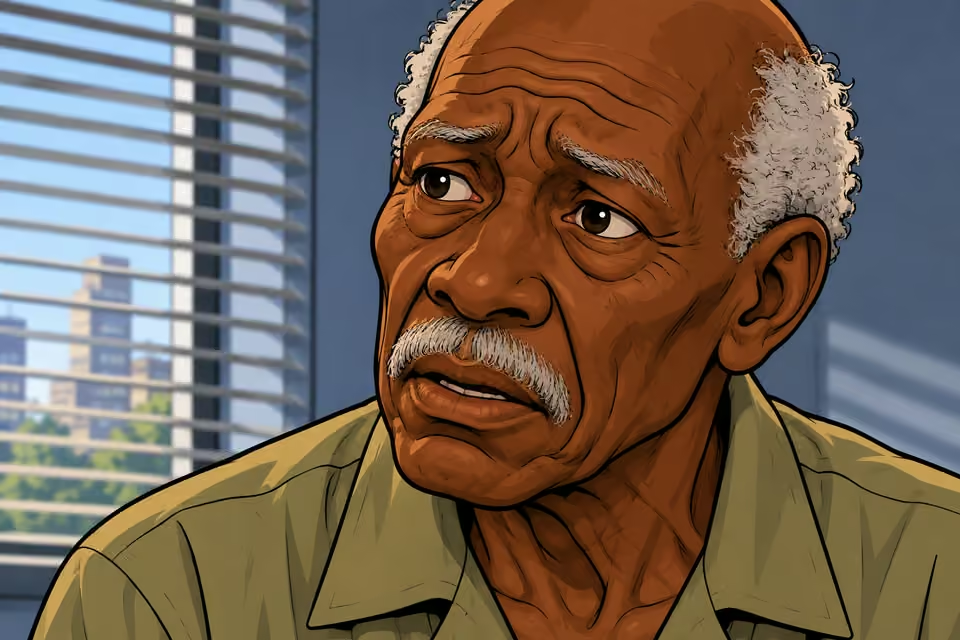
The janitor remembers a frightened and unusually quiet cook.

“Messed up how?” Musa asked.

Musa asks what Moses meant by making a mistake.

“Didn’t say. Just kept saying, ‘I gave it to the wrong person. I gave it to the wrong person.’ Over and over.”

The janitor repeats Moses’s troubled words.

“When was this?”

Musa asks when the conversation happened.

“The night after the wedding. Before he disappeared.”

The janitor places the conversation after the wedding.

Uju arrived at the estate uninvited, again. This time, she didn’t care.

Uju arrives uninvited at the estate.

Amaka met her in the front foyer.

Amaka meets Uju in the front foyer.

“You look flushed,” Amaka said. “Bad traffic?”

Amaka remarks on Uju’s flushed appearance.

“You lied to me.”

Uju accuses Amaka of lying.

“That could refer to many things.”

Amaka answers Uju’s accusation with dry detachment.

“In 2015, you promised you’d never become her.”

Uju reminds Amaka of her old promise.

“I tried.”

Amaka quietly says that she tried.

“You’re worse.”

Uju tells Amaka that she has become worse.

Amaka folded her arms. “Is this about the wedding? Or the poison? Or are you just angry I’ve changed without asking your permission?”

Amaka folds her arms and challenges Uju.

“You paid me to disappear.”

Uju says that Amaka paid her to disappear.

“No,” Amaka said. “I paid you to survive.”

Amaka insists that she paid Uju to survive.

Uju’s voice trembled. “What did you give him?”

Uju asks what Amaka gave the man.

Amaka paused.

Amaka pauses at Uju’s question.

“Who?”

Amaka asks whom Uju means.

“The cook. Moses. What did you hand him that morning? Before the toast.”

Uju presses Amaka about what she handed the cook.

Amaka tilted her head.

Amaka tilts her head at the question.

“You’re fishing.”

Amaka dismisses Uju’s question as a guess.

“I’m remembering,” Uju snapped. “You sent me to get your shoes. When I came back, he was standing in the hallway, staring at your hands. You flinched when I asked who he was.”

Uju insists that she remembers the hallway encounter.

Amaka took a step closer.

Amaka steps closer to Uju.

“You’re scared,” she said quietly.

Amaka quietly tells Uju that she is scared.

“You should be.”

Uju tells Amaka that she should be afraid.

“No. I’m scared for you. Because you’re getting too close to something that doesn’t need your truth.”
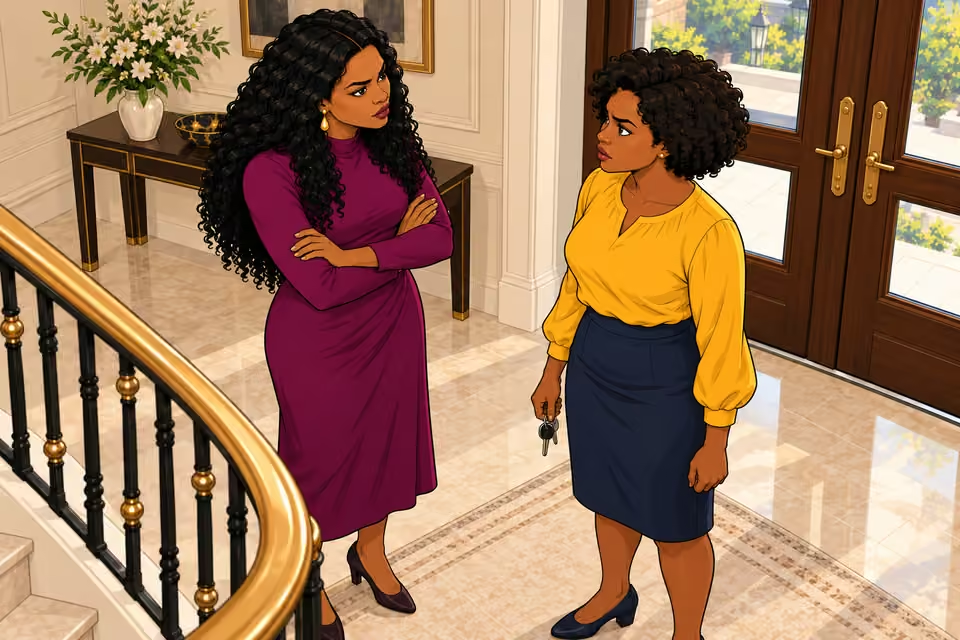
Amaka warns Uju against pursuing the truth.

Uju turned to leave. “You’re not untouchable, Amaka. No matter how many tears you fake.”

Uju turns to leave with a final accusation.

Amaka watched her go.

Amaka watches Uju leave.

Then whispered to herself, “They were never fake. Just misplaced.”

Alone, Amaka whispers that her tears were misplaced.

Musa drove to Yaba that evening, visiting the shelter Moses had listed as his temporary residence. Most of the staff were volunteers who rotated weekly.
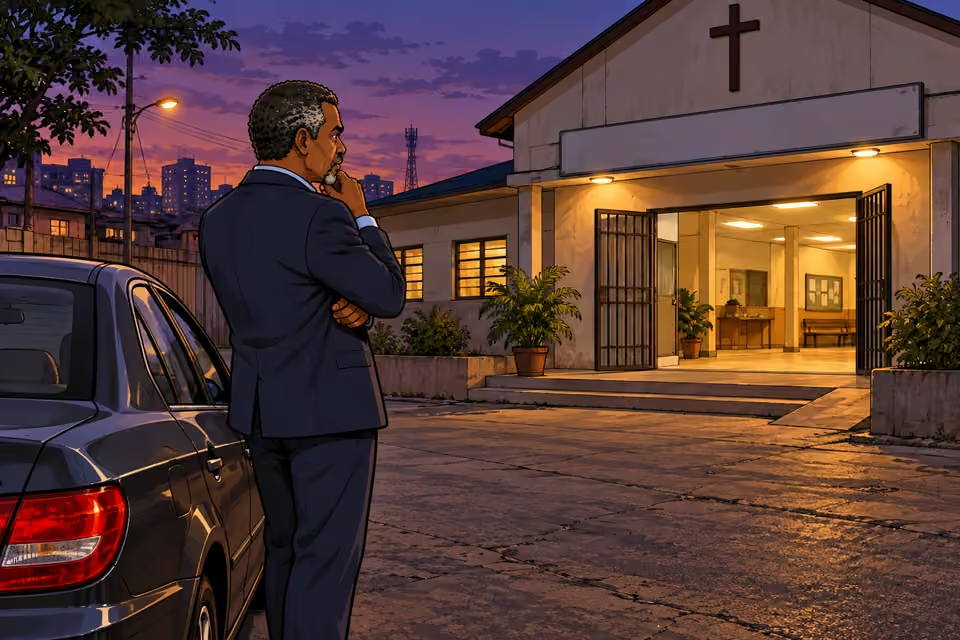
Musa visits the Yaba shelter that Moses had listed.

One woman remembered him.

A shelter volunteer remembers Moses.

“He didn’t talk much,” she said. “But he left behind a small bag when he ran. Said he’d come back. Never did.”

The volunteer explains that Moses left a bag behind.

She handed it over—old, worn leather. Inside: two shirts, a toothbrush, and a small black notebook.

The volunteer hands Musa the worn bag and its contents.

Musa opened it.

Musa opens the black notebook.

Most pages were blank. But toward the end, a scrawl of hurried notes:

Near the notebook’s end, Musa finds hurried notes.

“She said it’s just something to help her mum sleep better.” “Glass must go only to her table. Only hers.” “Don’t ask questions. Just deliver.” “Her eyes didn’t match her words.”
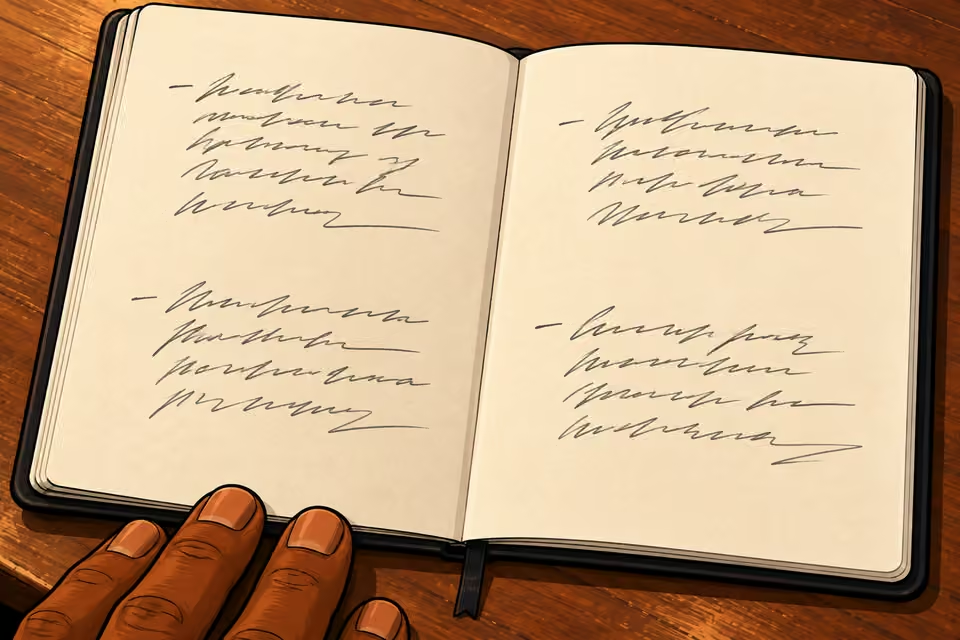
The notes describe the instructions Moses received.

Musa closed the notebook slowly.

Musa slowly closes the notebook.

This wasn’t a professional hit.

Musa realizes that the death was not a professional hit.

This was persuasion.

Musa recognizes persuasion behind the crime.

Control.

Musa weighs the role of control.

Performance.

Musa recognizes the calculation behind the performance.

And the conductor was someone who knew exactly when to cry and when to command.

Musa considers who could command such a performance.

Back at the estate, Amaka stood alone in her mother’s room.
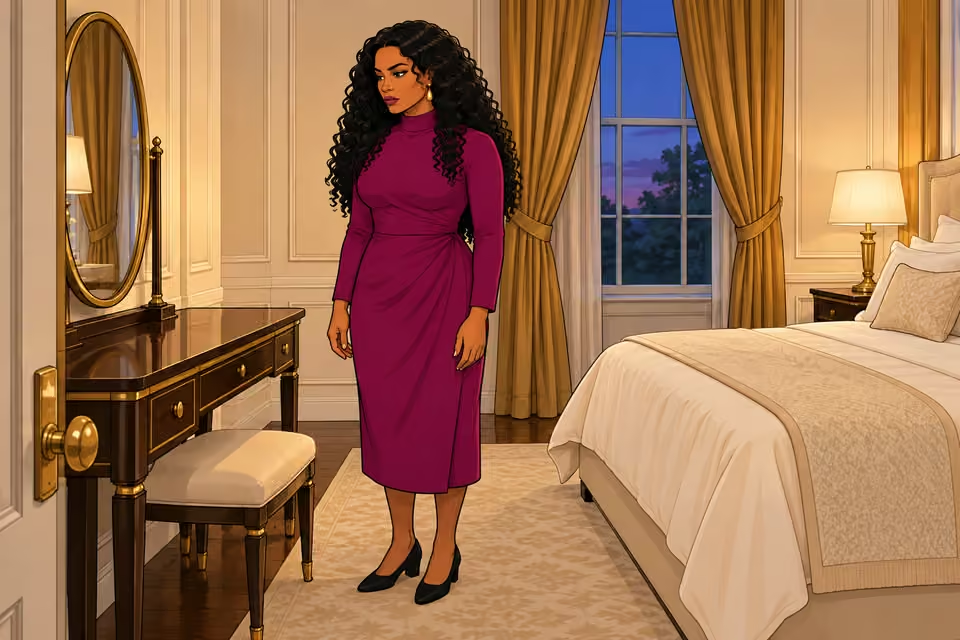
Amaka stands alone in her mother’s cleaned bedroom.

It had been cleaned. The scent of oud still clung to the drapes, but everything else had been stripped away—clothes donated, cosmetics cleared, secrets buried.

Agnes’s bedroom has been stripped of her possessions.

She opened the bottom drawer of the vanity and pulled out a faded photograph.

Amaka retrieves a faded photograph from the vanity.

Her, at ten. Agnes behind her. Arms on her shoulders like a queen posing with her protégé.
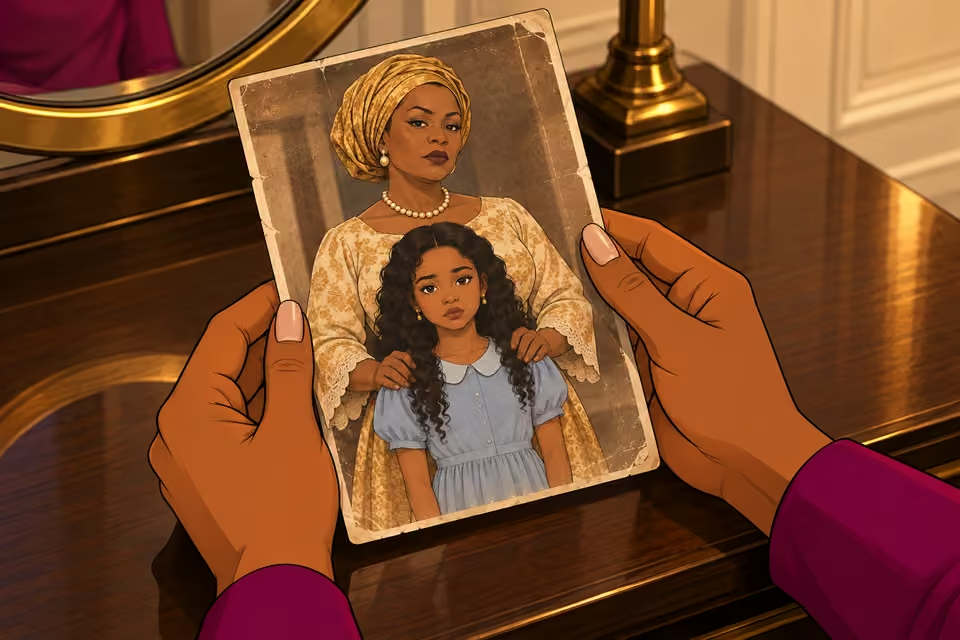
The photograph shows ten-year-old Amaka with Agnes behind her.

But Agnes’s fingers in the photo were clenched.
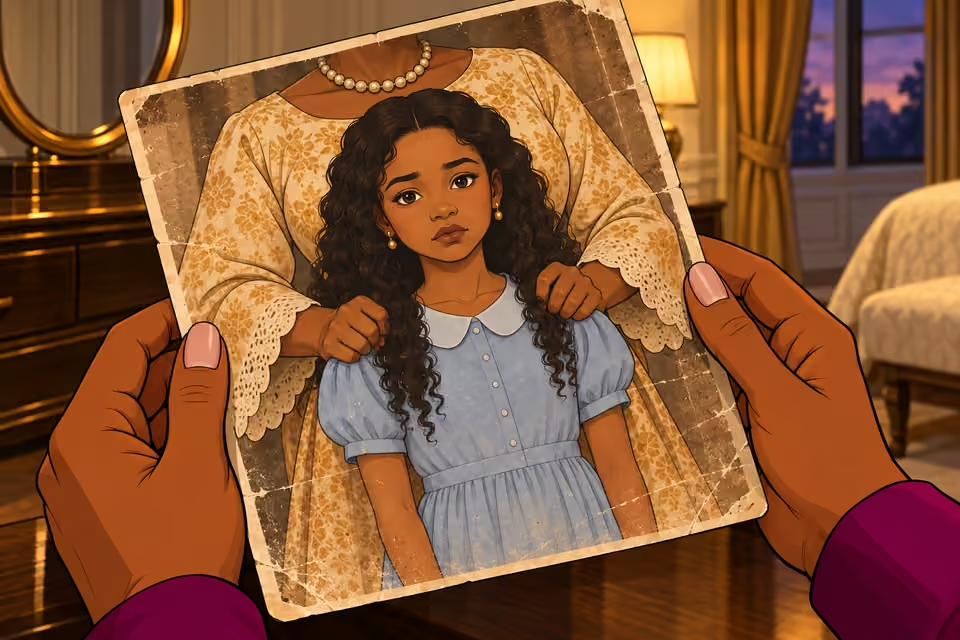
Agnes’s fingers are clenched on the child’s shoulders in the photograph.

Even then, she’d held Amaka like something to be claimed—not loved.

Amaka recognizes possession rather than love in the old portrait.

She tore the photo in half.

Amaka tears the photograph in half.

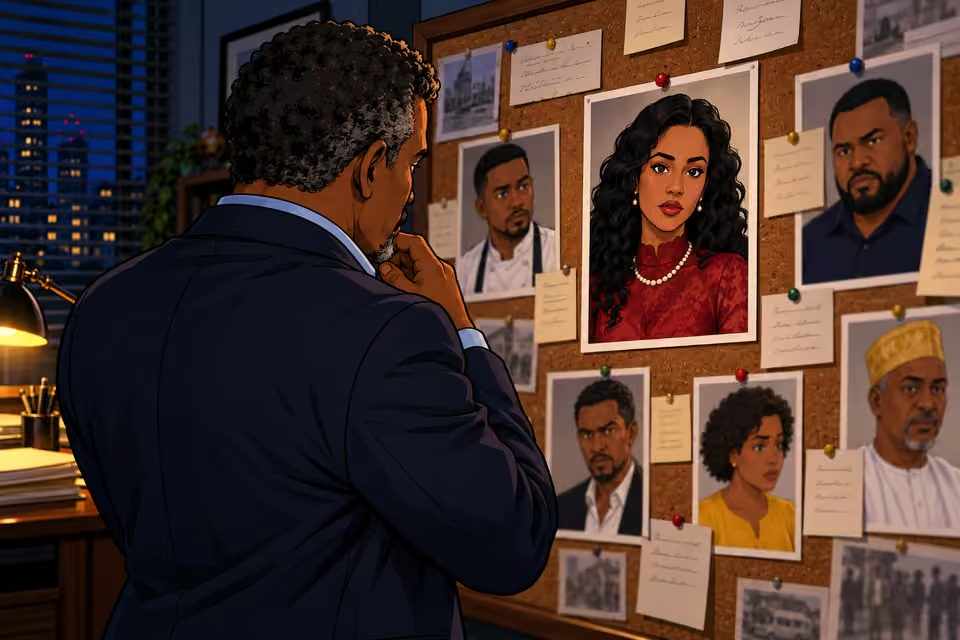
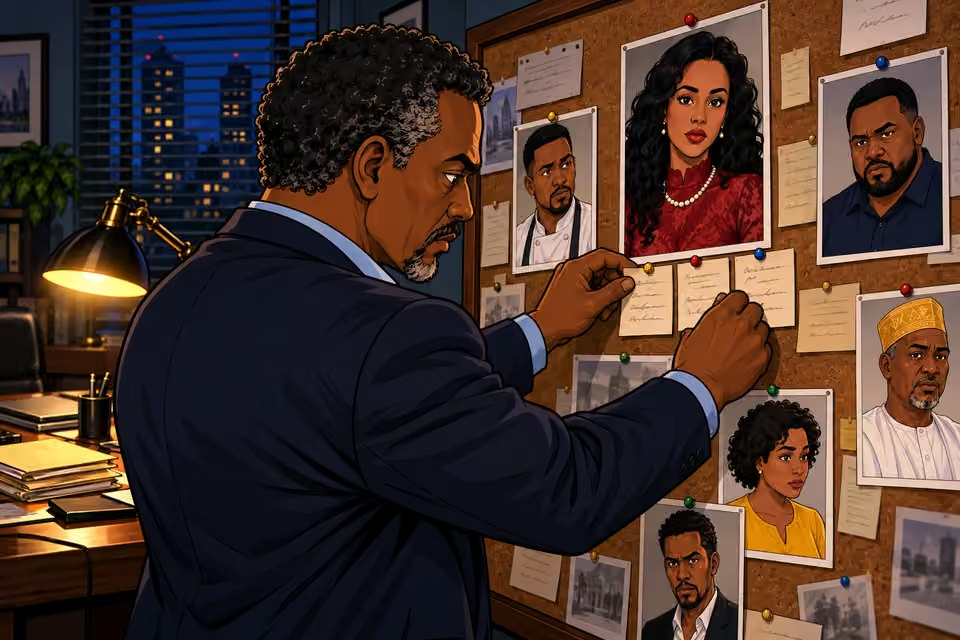
That night, Musa laid out all the pieces on his board.
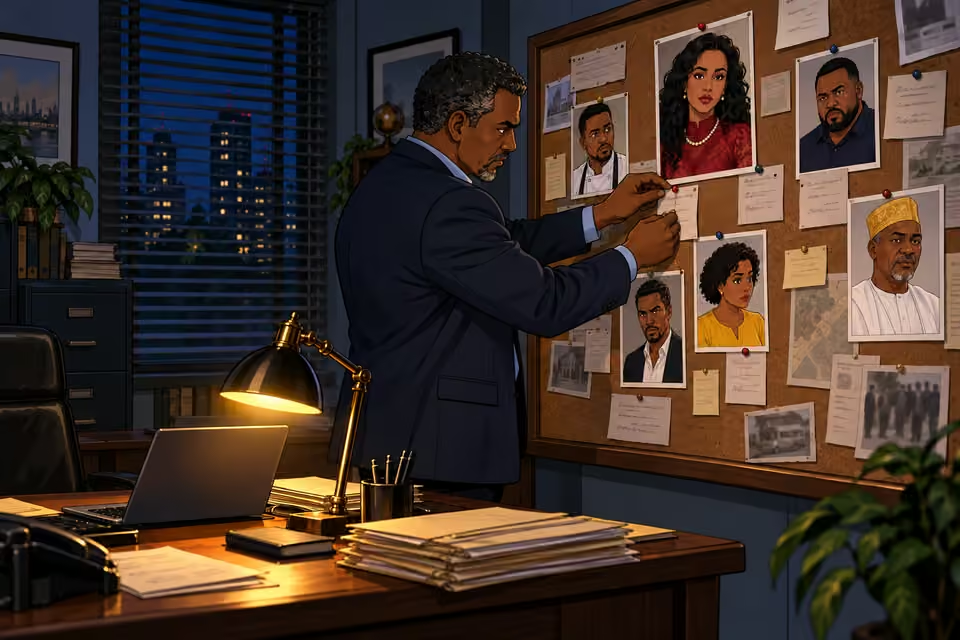
That night, Musa arranges the evidence on his board.

Moses: manipulated, maybe accidentally involved. Still missing.

Musa considers the missing cook’s manipulated involvement.

Gabriel: compromised, guilty, but not the killer.

Musa weighs Gabriel’s compromised role.

Ikenna: angry, abandoned, not clean, but not clever enough.

Musa considers Ikenna’s anger and limitations.

Uju: emotionally unstable, but powerless.

Musa sees Uju as vulnerable but powerless.

Bamidele: motive, means, no opportunity.
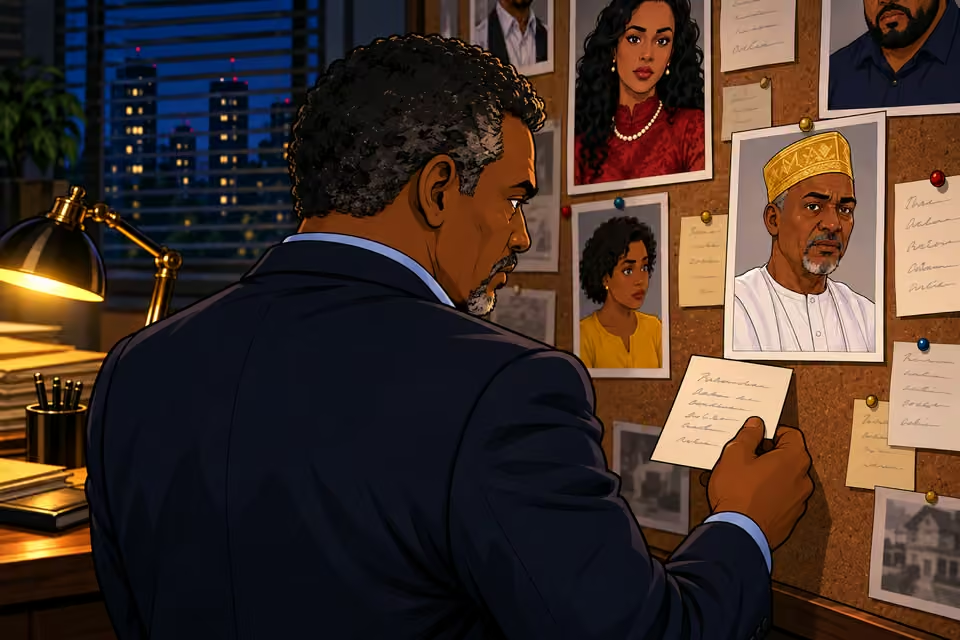
Musa weighs Bamidele’s motive against his lack of opportunity.

Amaka…

Musa turns his attention to Amaka.

She had everything.

Amaka appears to possess every advantage.

Motive. Opportunity. Silence.

Musa considers Amaka’s motive, opportunity and silence.

But no proof.

Musa recognizes that he still lacks proof.

And worse: she made him believe her.

Musa realizes that Amaka made him believe her.

He stared at her photo—taken at the funeral, in red.

Musa studies the photograph of Amaka in red.

Then reached for a red marker.

Musa reaches for a red marker.

And drew a slow, careful circle around her face.

Musa carefully circles Amaka’s face in red.
There’s more to the story.
Read the original blog post ↗